


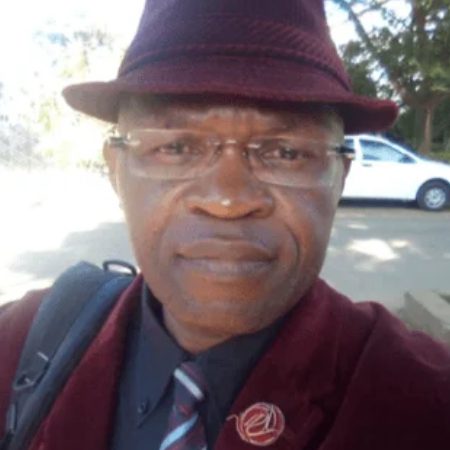
Poverty Challenges and Solutions for the New Millennium: A Case Study Approach to examining the Effectiveness of Christian Faith Based Organizations (CFBOs) in their Efforts to eradicate Poverty in Urban and Rural Kenya – graduated in 2015
My study was built around the role of faith based organisations (FBOs) in fighting poverty in Africa, noting its richness in natural and human resources, yet having high levels of poverty. I found that most studies blamed the effects of colonialism and coloniality, and the role played by a neoliberal school driven by the World Bank and IMF as the main causes of poverty in Africa.
I also noted that when FBOs seek solutions to poverty, they tended to select the same methods and theories of the agencies they critiqued as contributors to poverty.
One example is the way the World Bank arrived at indicators that delineate absolute poverty and relative poverty. Absolute poverty referred to individuals who lacked basic life necessities of like food, shelter, clean water, and access to universal health care, largely due to insufficient income per household. Absolute poverty was measured using a monetary benchmark of $2 i.e. anyone living below $2 per day would be considered poor. This poverty line has been raised to $6 per day.
Relative poverty, on the other hand, was based on regions, human desires, and comparative analyses on reasons for economic imbalance. Relative poverty often leads to social exclusion, where families may not afford basic things they consider normal and necessarily important. These could cover education, healthcare, and other social needs. The comparative analysis included the voices of people in poverty.
The poor across Africa and Asia defined poverty as a lack of relational wellbeing, among other things. The challenges of poverty and reduced donor support to Africa in the 1980s called for cost sharing in meeting education, health care, and social needs, which poor people could not afford. It meant the poor drifting further into poverty.
My research inquiry led me to reflect on how to introduce social transformation in development work in Africa.
was further inspired by the work of Bryant Myers through his OCMS thesis published 2013, on ‘Walking with the Poor’. Having worked in India as a missionary for twenty years, the Indian students he sent for postgraduate studies to the UK, helped Myers to look at poverty as a lack of relationships, not just income.
I used that information to build an argument for FBOs, who, I felt, were better placed in communities to address human challenges than most development agencies. The question on relational well-being stood out. I realized that FBOs could bring out the transformation required by promoting communities collectively working together, thereby creating systems of self-sufficiency and sustainability. This is well demonstrated in the early church where they shared what they had-Acts of the Apostles.
Coming back to Kenya, l embarked on building a PhD programme on social transformation. We have over 140 students working on how faith-based agencies respond to human needs like peace and security, management of development organisations, democracy and governance in Africa, sustainable development and sustained living, climate change, social entrepreneurship, positive psychology and ministry. Our students cut across all faiths researching around problems affecting Africa with a social transformation lens.
So far I have supervised 8 PhD and 12 masters students to bring a faith enriched approach to mission and development in respective communities through a spirit of communal living and relational wellbeing.
More about Reginald Nalugala and his Works
Reginald Nalugala is currently Tutor in the PhD programme at Tangaza University, specializing in social transformation. You can read his LinkedIn profile and read more about his academic achievements on Academia and Researchgate.